

The onshore planning application for the redevelopment of Falmouth Docks has been approved by Cornwall Council’s Strategic Planning Committee. At a packed Lys Kernow this morning, members of the committee voted on an application submitted by Balaena Ltd, granting permission for extensive works to the historic docks above the waterline. The decision came despite significant […]
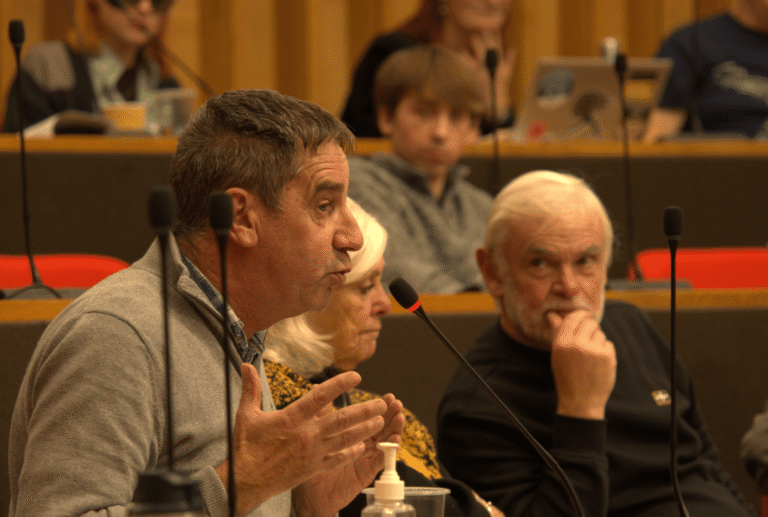
The onshore planning application for the redevelopment of Falmouth Docks has been approved by Cornwall Council’s Strategic Planning Committee. At a packed Lys Kernow this morning, members of the committee voted on an application submitted by Balaena Ltd, granting permission for extensive works to the historic docks above the waterline. The decision came despite significant pressure from campaigners, around 50 of whom gathered at the Council’s main entrance. The demonstration was largely organised by the Stop the Dredge campaign. The application was approved by seven votes to three.
In recommending approval, subject to conditions, the committee’s presiding officer outlined numerous risks associated with the redevelopment. These included concerns extensively documented by campaigners and the local press. Among the most controversial is the proposed disposal of sediment accumulated on the dock bed. If current plans proceed, up to 12,000 lorry journeys could transport contaminated sediment through Falmouth to a disposal site in Somerset over an 18-month period.
In balancing these concerns, the officer also highlighted the potential, though as yet unconfirmed, economic benefits of the redevelopment. These included the possibility of Falmouth becoming a hub for the assembly and transportation of floating offshore wind infrastructure to the Celtic Sea.
Familiar arguments were revisited in the chamber, with particular attention given to proposals to increase cruise passenger numbers from around 50,000 to 200,000 annually. Balaena’s spokesperson rejected suggestions that this increase would overwhelm the town, pointing instead to the 60,000 visitors welcomed by Falmouth during the four-day International Sea Shanty Festival 2026.
Falmouth Town Councillor Samuel Carmichael spoke in support of the need for wider industrial development in general, stating: “We need to develop industry in Cornwall, in order to provide jobs. We cannot rely on the tourism and cruise industries.” Councillor Mike Thomas for Helston North, called for greater regulation of cruise tourism across Cornwall and for his part Councillor Andrew Long was more direct in his assessment, stating: “Cruise vessels are not environmentally friendly vessels, they are polluting vessels.”
On the issue of Scope 3 greenhouse gas emissions, the officer suggested that concerns about the potential impact of the development relied on numerous “assumptions” about the environmental consequences of expanding cruise tourism in Falmouth. However, information presenting an alternative perspective on these concerns was not shared to the chamber, and environmental data scientist Tim Hughes suggested plainly that cruise tourism would likely increase greenhouse emissions drastically.
The offshore element of the proposed development remains subject to approval by the Marine Management Organisation (MMO), which has so far provided little public communication about its decision-making process. It is these offshore proposals that have generated some of the greatest concern among campaigners. Key issues include the disposal of material dredged from the docks (“clean” and “contaminated”) the intended end uses of the redeveloped facilities, particularly their potential role in accommodating cruise liners and supporting the military-industrial complex, and the possible impact on Falmouth’s oyster fishery and wider shellfish industry.
A decision from the MMO is pending.
Image via: Cobblestone Media.