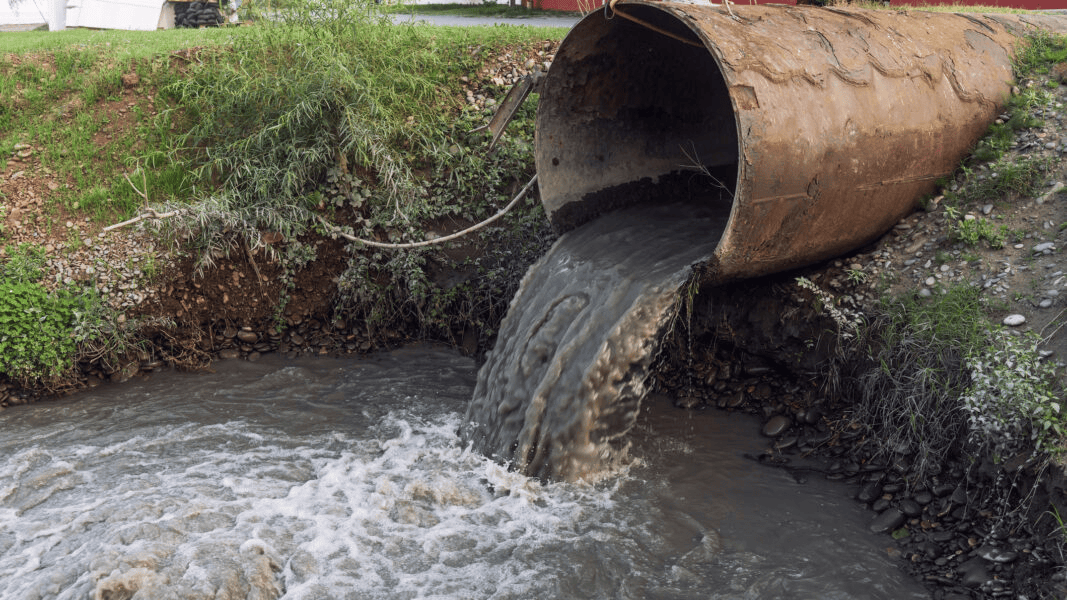
This week, 4 local and parish councils passed a motion of no-confidence in South West Water (SWW). Local authorities in Helston, Crowan, Penryn, and St Ive and Pensilva passed motions of no-confidence in the utility firm, citing “record bills” and “raw sewage” as persistent problems, despite government intervention. More councillors will vote on the motion next month, with meetings delayed by the Easter period. These include Falmouth, Carn Brea, Camborne, and Newquay.
Each council voted overwhelmingly in favour of the motion, which was facilitated by the Dowr Glan (Last Drop) campaign, seeking to dislodge South West Water from its position as the sole provider of water in Cornwall. Others like Drip Drip Tamar, a community group based in the Tamar Valley, have held citizens assemblies on the problem in recent months.
In an ironic turn, Penryn Town Council was set to hear from SWW on a separate issue, relating to repairs on Commercial Road. The town’s main road has seen spillages of sewage in recent months from broken tarmac and a burst pipe in high rainfall periods. Representatives from the company were, however, conspicuously absent from the full council meeting on Monday.
Formed in 1989, South West Water is a private utilities firm owned by the Pennon Group, which operates water supply, waste management and energy services across the UK. SWW’s unique span encompasses massive swathes of Devon and Cornwall, and was created by the fusion of 8 public water management boards. It’s centralised monopoly on the service in Cornwall and Devon and private ownership structure has led many activists and councillors to claim it’s work is profit-driven, rather than oriented towards public service.
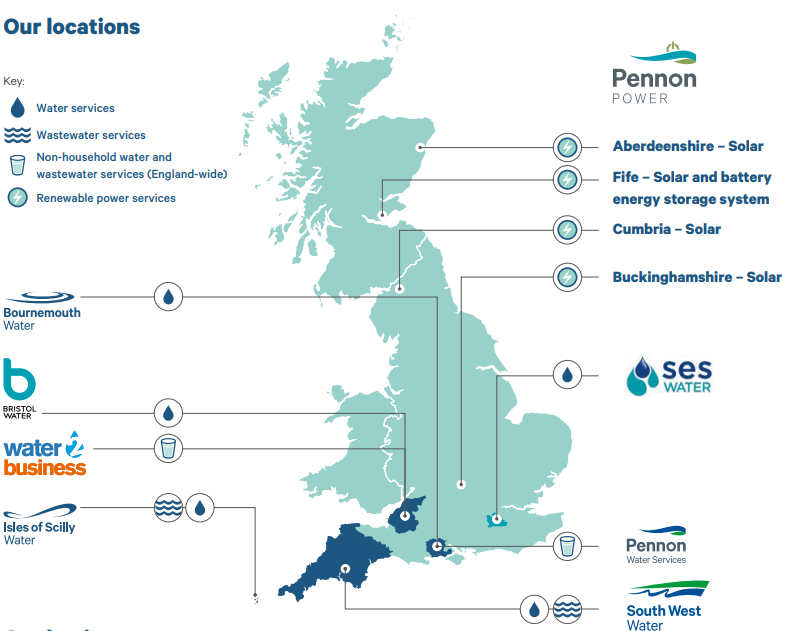
Map of Pennon Group activities. Pennon Group About Us Page.
In recent years, SWW have drawn horror and condemnation from residents of Cornwall, as waterways are repeatedly polluted. According to data from the Environment Agency, South West Water accounted for the most hours of sewage spilled into waterways in 2024, at an astonishing 544,000 hours.
An important distinction is made in Environment Agency data between Combined Sewer Overflows and dry day spills. The former occur on days of rainfall or snowmelt, when Britain’s complicated sewer system is overwhelmed by the amount of water and waste flowing through the pipes, which causes sewage spills when combined with underinvestment in water infrastructure.
Dry Day spills, however, are sewage spills that occur on days of under 0.25mm rainfall, and are considered illegal breaches of responsibility by utility companies. Dry spills are also more harmful, as without the added water to dilute waste, swimmers and surfers are more likely to become infected by contaminated water.
Though the overall volume of sewage in Cornish waterways has slightly decreased since that time, this is due to the exceptionally dry weather of 2025. Analysis done by Surfers Against Sewage found that South West Water was responsible for the highest number of “dry” spills, at 46,191 hours in 2025.
The company have never achieved more than a 2-star rating from the Environment Agency in their annual Environmental Performance Assessment, and are consistently regarded as one of the most negligent service providers in the UK.
Penryn Town Councillor Mael Garrec, the primary organiser on this campaign, gave comment at the Full Council meeting on Monday about the number of those affected by waste mismanagement. Quoting data gathered by Surfers Against Sewage, Cllr Garrec told the Council of over 500 sickness reports caused by contact with contaminated water by SWW in 2025.
This mismanagement of Cornwall’s water runs parallel to record profits by the company, and whopping dividends given out to shareholders and company officials. Company shareholders received a shared pay-out of £127 million in 2024, the same year the company was fighting a legal battle against victims of water-borne diseases in South Devon waterways.
At Helston Town Council, Cllr Damien Willey gave an impassioned speech to his fellow members, labelling the provider “gangsters” and demanding nationalisation. When Cllr John Boase asked for the motion to be changed – in order to encompass the entire remit of SWW – Willey stated that “we must start somewhere.”
The motions put forward to Cornwall’s councils have no direct effect on the ownership structure of water management. Instead, the motions act as a powerful statement from local authorities on one of the most controversial issues in local and national politics. Many councillors wish to see SWW be put into administration, and then nationalised, and others have talked of large compensation packages to communities directly affected by dirty water.
Cobblestone Media will provide updates in this ongoing process, as Cornwall’s representatives seek to break away from the firm.
Image via: Surfers Against Sewage.


Leave a Reply