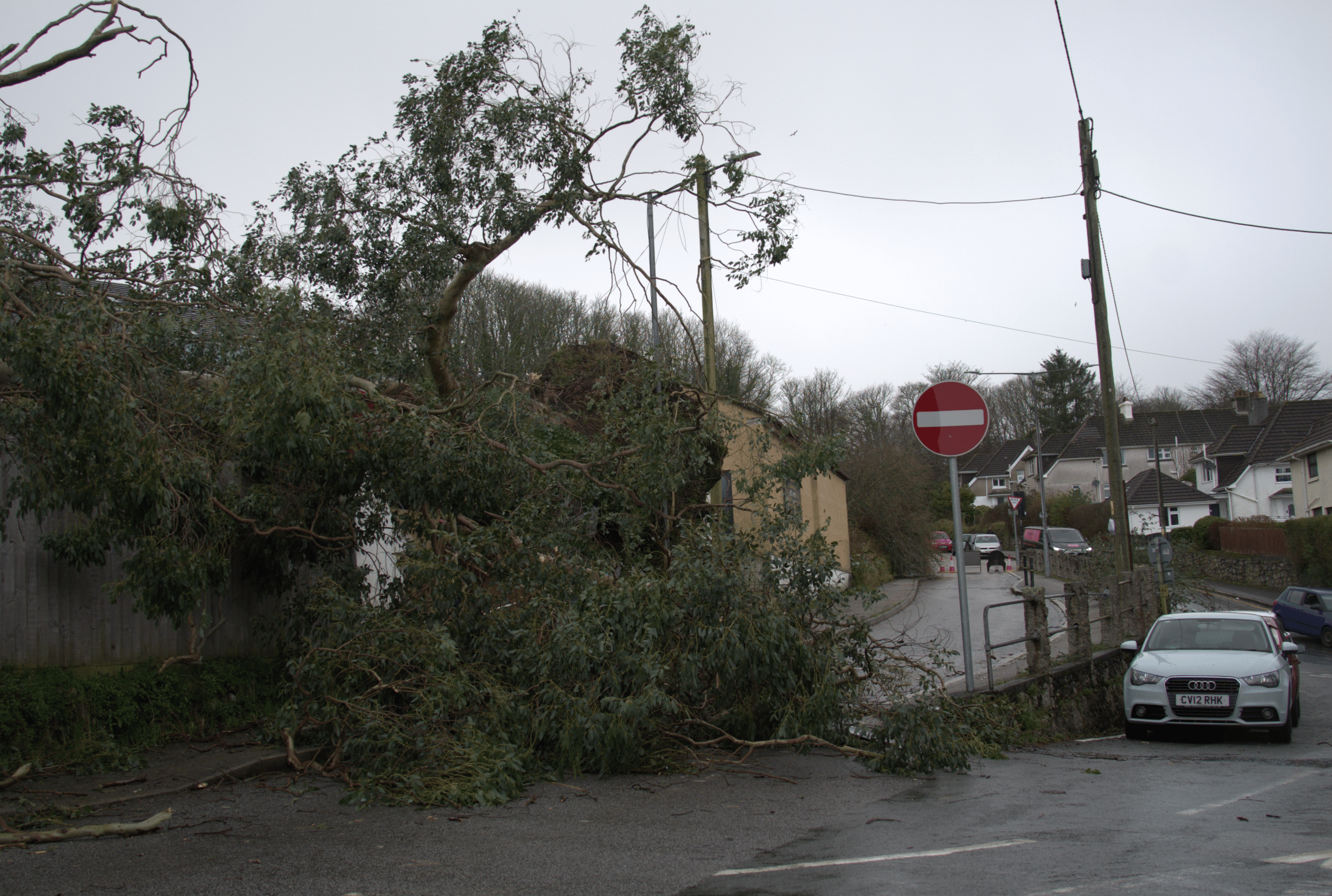
Fallen tree blocking the road in Penryn.
Last week brought the latest in a series of extreme weather events to hit Cornwall in recent years. Trees toppling over roads and property, debris dangerously flying through the wind, and blackouts of water and electricity were common throughout Kernow as Storm Goretti hit. It is clear many communities across the UK would have struggled to cope with the high speeds of Thursday’s storm.
But where Cornwall is different is in its rurality and therefore isolation from centres of comprehensive urban infrastructure, more durable against the onslaught of “once in a generation” storms that come year after year. In the itchy heat and paralysing frost of the climate crisis, rural communities like those in Cornwall are getting left behind. And this is not only evident in how neighbours are forced to reassemble their homes and villages after routinely extreme weather comes howling through, but in the Government’s own documents, which leave communities like Cornwall in the lurch.
Storm Goretti – “once in a lifetime storm” for the nth year running.
Thursday’s storm gained a rare ‘Red Alert’ designation from the Met Office, warranting ‘Threat to Life’ warnings alongside alerts sent directly to people’s phones across Cornwall through the Government’s emergency alert system. At the peak, 47,000 homes were without power – some not expecting to regain connection until Tuesday. The event was described as a ‘weather bomb’ which occurs when pressure drops very quickly in a short span of time, resulting in winds strong enough to bring down trees. Gusts of 99mph were recorded at St Mary’s Airport on the Isles of Scilly, a record high for the site. Goretti brought one fatality, destroyed several homes, and has ultimately revealed that Cornwall is not prepared for what climate breakdown is bringing.
Winter after winter, Cornwall faces the brunt of storms, cutting off power to homes and flooding shopping streets for days. More than 50 schools in Cornwall closed early on Thursday due to the storm, and some school bus services remain cancelled this week as a result of road blockages. This is a problem which will continue to worsen, as Cornish children and young people already face heavy disadvantages due to educational isolation.
The deadly effect
Despite the life-threatening impacts of extreme weather events, mainstream media often paints heatwaves and snowstorms as opportunities. High temperatures bring beach trips and warm tans, a blizzard in December means a white Christmas. But both extremes are associated with excess deaths, especially for those who either can’t afford to heat their homes or have existing health issues. These extremes also bring indirect harm, for example instances of domestic violence increase on days with above-average temperatures.
Campaigners have been trying to raise these issues for many years. Insulate Britain, a direct action campaign active in 2021, blocked motorways to push their message about tackling fuel poverty in the face of worsening climate conditions. Despite supporters receiving prison sentences for their actions, the Tory Government launched a home insulation scheme in 2023, aiming to insulate 300,000 of the most in-need homes by 2026. The scheme is currently hugely behind its own targets and the majority of interventions have proved faulty.
Cornwall isn’t prepared for climate collapse.
Cornwall is often hailed as a leader in climate action – it was the first local authority to develop a Climate Risk Assessment, and is home to many activist groups and the university houses several world-leading climate scientists. However, much of the effort invested in climate action is centred on mitigation (reducing the amount of carbon dioxide emitted into the atmosphere) rather than addressing and adapting to the worsening impacts.
Even if Cornwall reached net-zero emissions tomorrow, we would still be facing the intensifying impacts of climate breakdown. Droughts, floods, heatwaves, and extreme wind are becoming more frequent in Cornwall, and will impact vulnerable people most. Storm Goretti was strong, and most are in the process of assessing the damage and recovering. But had there been a follow-on storm, extreme cold, or heavy rain (known as a compounding event), many would have struggled to keep themselves safe. As extreme weather becomes a new normal for Cornwall, there needs to be an intense effort to prepare for and recover from the impacts, rather than a patchwork approach.
Rural areas have the added pressure of poor infrastructure and isolation, creating difficulties for response, rescue, and recovery. With this and the added vulnerability of coastal erosion and geographic isolation, Cornwall will continue to face degradation of living standards. Great Western Railway cancelled all services in Cornwall on the day of Storm Goretti, and services continued to be heavily disrupted throughout the weekend. It remains clear that in the context of the UK, rural communities like Cornwall are not set for worsening climate conditions.
Community resilience is a key component of the Government’s risk response strategy, however it often relies on the goodwill, time, and skill of regular people. This has been successful many times, with individuals, charities, and businesses offering free food, warm spaces, and information to keep each-other safe. Whilst rural communities demonstrate the ability to maintain mutual support networks, this resilience can mask the underlying needs of communities, leaving them vulnerable and unable to meet the needs of all without proper resourcing and preparation.
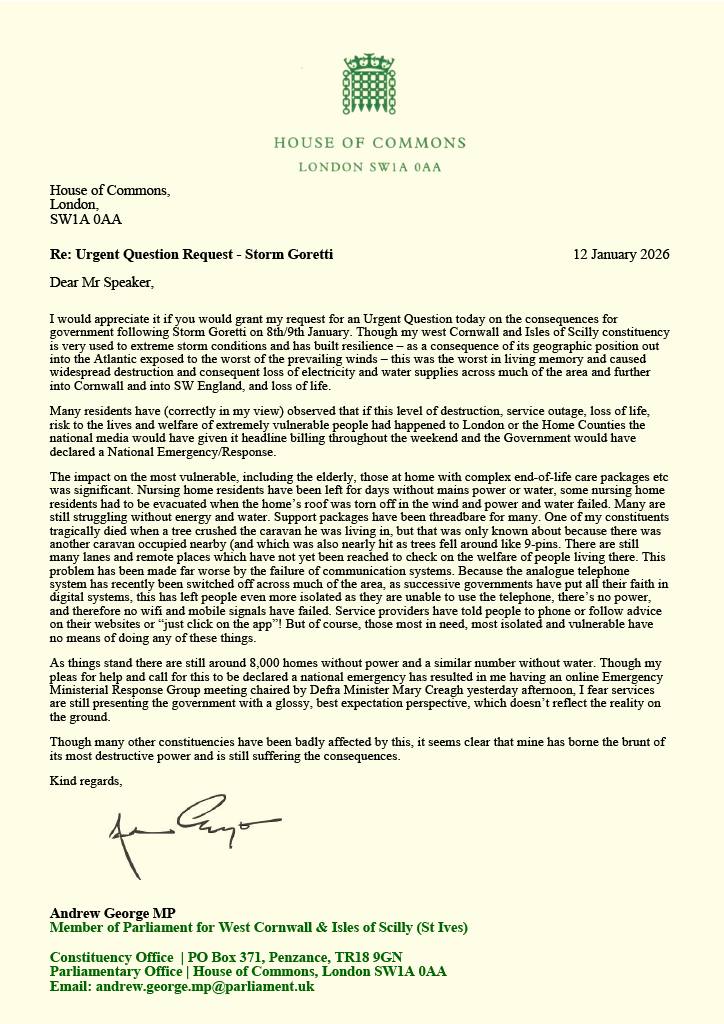
According to MP for Truro & Falmouth, Jayne Kirkham, an emergency meeting in response to the storm was set up between Cornish MPs and the Government this week. Andrew George, MP for St Ives has, however spoken out today at the governments absurd choice to back down on this, instead granting an emergency meeting for West Grinstead, a town in West Sussex experiencing disruption. In a statement on social media, George said the following:
“I called on our House Speaker to grant me the right to call for a National Emergency response to help the communities across Cornwall and the Isles of Scilly after the massive devastation caused by Storm Goretti.
“But instead, he’s granted one for East Grinstead, which has been suffering a water outage across 16,500 homes.
“Now, I have every sympathy for the beleaguered people of East Grinstead and would never seek to diminish the terrible impact this has had and is having on them. But I’m certain the impact of the devastating storm experienced in Cornwall and on Scilly would dwarf that of the poor folk affected in the South East. Over 50,000 homes have experienced water and/or electricity outages here.
“Here’s my letter. (shown below) The official figures for homes cut off from water and electricity in Cornwall and Scilly is unreliable and, from what I saw and have seen, is far worse than the gloss presented by the utility providers. Added to this, most of the areas affected by water supply outage have not been able to report or communicate because they had no means of doing so, thanks largely to those higher authorities who turned off the previously functioning analogue telephone system, which has proven to be more resilient following these incidents than the much vaunted digital technologies.”
One thing remains clear from the government’s messaging on extreme weather events like this and their man-made cause. Reducing greenhouse gas emissions and responding to the impacts of climate breakdown will require radical system change, not just fiddling around the edges of an industrial capitalist world based on extraction and consumption. And in any case, Cornwall and other rural communities are simply not suited with the provisions to deal with the onslaught to come.
Image Via: Cobblestone Media.

Leave a Reply