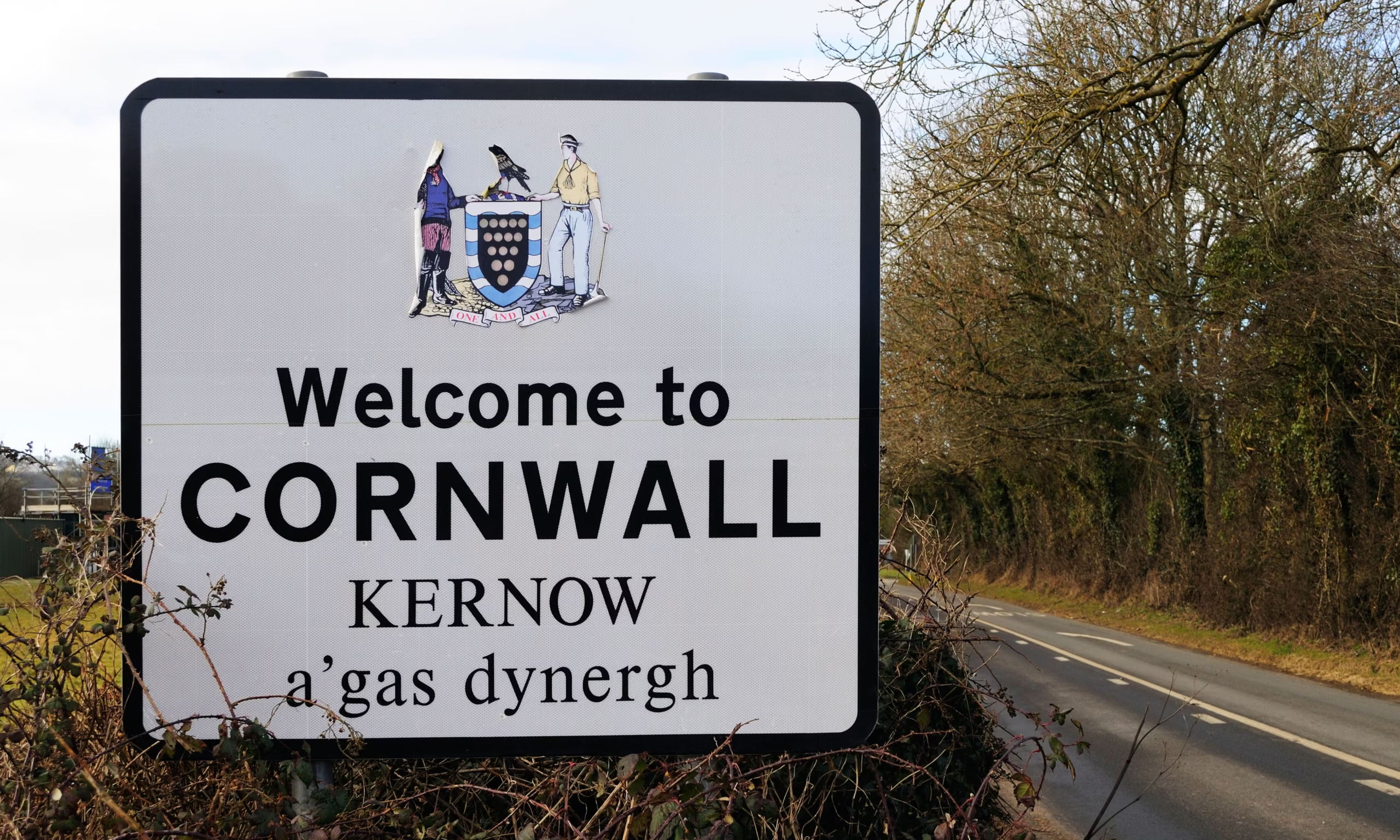
The year has been a remarkable one for the Cornish autonomy movement. Campaigners from all over Cornwall and beyond have shifted the political conversation towards discussions of greater control over our economy and society. Petitions, demonstrations, and gestures from elected chambers have together formed a solid political tendency, seemingly charging headlong towards Westminster to demand self-determination.
Cornish cultural life has been similarly boosted this year, as Kernewek gained greater recognition of Part III status under the European Charter for Regional and Minority Languages. The broader increase in dissent has complemented this, as we have sought to break away from Westminster and the wider decline in English political life.
Though 2025 has been a phenomenal year for the Cornish movement, campaigners continue to push for greater autonomy for the nation and the communities that comprise it.
Cornwall at the ballot box.
May’s local elections typified Cornwall’s break from the Conservative Party. Reduced from 43 seats to just 7, the council’s makeup is now far more complex, with Reform’s lead slipping amid internal strife and the Liberal Democrats taking the helm through coalition leadership. Leigh Frost, Lib Dem leader of the council, has made himself a stalwart in the chamber for the Cornish movement, showing a tendency to be much more progressive than some anticipated after the May elections.
Mebyon Kernow were reduced in number in the authority chamber, but the Green Party’s boost from one to three councillors came as a pleasant surprise in view of their policy on Cornish devolution. The Greens are, indeed, the only Westminster party to endorse the idea aside from Plaid Cymru and the SNP, with local councillors such as Falmouth’s Jon Stowell leading Cornwall’s Green campaign for nationhood and self-determination.
November’s government announcements also shocked many, with the budget laden with promises to Cornwall from Rachel Reeves. The first, and most corporate, was the Kernow Industrial Growth Fund, which would establish a £30 million fund to invest in Cornwall’s comparative sectoral advantages, including critical minerals, renewable energy, and marine innovation, subject to a full business case. Along the lines of Mebyon Kernow’s policy, a Critical Minerals Strategy, Vision 2035, was also set out: “Optimising domestic production and creating resilient supply chains; tungsten, tin, and lithium in Cornwall.” However, these are not guarantees for Cornwall’s economy, and campaigners have viewed them with cautious optimism.
Taking the fight to the street.
Cornwall’s devolution campaigners took to the streets this year with demonstrations, mostly focused on building awareness of the national movement. Much of this work coincided with a petition calling for Cornwall to be recognised as the fifth nation of the United Kingdom, which closed on 11 September 2025. The petition gained thousands of signatures across Cornwall’s constituencies—24,000 in total—but received a weak government response at the time of its closure. Many within the Cornish movement cited how late the petition had been noticed by the public, and questioned how much support it might have gained had it been the focus of a campaign much earlier.
Demonstrations have also been a staple of Cornwall’s radical movements for years, as shown in the work of Cornwall Resists and others pushing for the rights of local communities. In September, Kernow Rydh stepped up to mobilise communities in Truro, calling for the government to grant greater autonomy for Cornwall and leading a coalition of groups including Cornwall Resists, Palestine Solidarity, and All Under One Banner Kernow.
The alliance of Cornish campaigners with others, particularly in Europe, has been striking this year. From Plaid Cymru’s national conference ahead of their local elections in May to international conferences in Majorca, Wales, and Brittany, Cornwall remains nestled within an international network of solidarity for national minorities.
Decisions affecting us, made locally.
Cornwall’s devolution looks increasingly likely as time passes. The government seems incapable of handling the challenges facing rural communities, which may lead Cornwall’s communities to grow ever more disenchanted with the promises of the parliamentary Labour Party. If the movement for Cornish autonomy can harness this antipathy and frustration with British domestic policy, decisions that affect us locally could finally be made locally.
Image Via: Alamy.
Leave a Reply