At a full meeting this week, Penryn Town Council sought to resolve an arduous dispute over the use of the dangerous herbicide glyphosate. The council, like many across the country, is responsible for the control of overgrown weeds in the local area, using a private contractor to supply weed killers for council teams to keep the streets clear. The potential use of dangerous herbicides has been an issue for environmentally conscious campaigners for years.
Glyphosate in particular is an incredibly controversial choice for councils, as its effects on human health (particularly that of children) as well as insect populations, are well documented and overwhelmingly harmful. Its effect on insects and even small mammals and birds has led to glyphosate being labelled an inadvertent pesticide, as well as a herbicide . The herbicide has been banned in large parts of Europe, such as France, where it is either banned altogether or heavily regulated. It has been a fierce subject of discussion in the UK, as many councils have either banned glyphosate-based products or restricted their use, with Glastonbury being the earliest to do so, in June 2015.
As stated in an open letter to Penryn Town Council – signed by 240 residents of Falmouth and Penryn – glyphosate has been shown to be detrimental to human health, with many international organisations claiming its carcinogenic effects. What’s more, a French court ruled in July that significant birth defects could be attributable to exposure to glyphosate in utero. One influential article which endorsed glyphosate as “safe” was retracted in December by the journal Regulatory Toxicology and Pharmacology. Documents made public by the US government show that this article was fraudulently signed by Monsanto employees, framed as independent researchers.
Penryn’s public effort was backed by 12 local community members, packed tightly into the gallery. Many spoke on issues important to them and raised concerns regarding the climate and wildlife of Penryn, with one member noting how increased flooding in the harbour town would spread glyphosate downstream to nearby waterways, affecting aquatic life.
At the start of the discussion, a series of quotes were listed from prospective contractors, detailing how much each form of weed removal would cost the council. The use of glyphosate was listed by the council’s Financial Officer, Rob Oliver, at £2,800 — a significantly lower sum in comparison to the over £30,000 required for more ecologically-compatible options. With those options in mind, Oliver suggested that the town either use the dangerous herbicide, choose to neglect weeding for the following year, or engage the community in an effort to upkeep the local area.
During the deliberation that followed, Mayor Mary May disparaged the idea of a united community effort, citing apparent past failures to encourage locals to upkeep the town. This was despite a statement made by Cllr Mael Garrec, noting successful community upkeep efforts in Mylor and Newquay. This discussion continued, as Mayor May repeatedly implied that the council should opt to use glyphosate, largely on the authority of David Garwood, a former Penryn town councillor and head gardener at Tremough Campus from 2007–2013. In the opinion of Mr Garwood, summarised in a letter given to the council, glyphosate was unfortunately the only solution to necessary weeding works. His letter outlined his reasoning, based on gardening carried out in Camborne, where he oversaw work in the town’s parks and streets. There are, however, conflicting perspectives on the matter.
The council ultimately decided to wait for a proposal from members of the local community, set to be ready by March. Should the proposal prove insufficient or unsuccessful, they resolved to attempt alternative methods of weed control to glyphosate.
Speaking on the result, Councillor Garrec stated:
“As expected, there was a tense debate, as the question of weeding is rooted in completely different visions of our environment. One prioritising “cleanliness” through getting rid of nature, and one prioritising the health of humans and the whole ecosystem of our community.
“We saw the most people we had ever seen at a TC meeting in the last few years. This and the number of letters and open letter signatures we received show that the public opinion has shifted in town, ditching outdated conceptions considering nature as alien and to be eradicated.
“Penryn residents are concerned by the collapse of biodiversity and eager to protect themselves against noxious products being used carelessly. We cannot justify anymore to spread harmful pesticides several times a year on people’s doorsteps and around schools. It’s time for positive change and a safer, more sustainable Penryn.
“This shows how the community can mobilise to impulse change. I welcome very much the fact that the community is stepping up and putting together a proposal to take over their streets and their plants. I look forward to seeing the town council work hand in hand with the community like this in the future.”
On the subject of glyphosate in Penryn, he stated:
“I had spotted this item in 2024 but had not had the opportunity to cast a vote on this topic. I was already aware of the serious concerns in the scientific community on this product, regarding its devastating impact on pollinator insects and birds which are at the heart of the biodiversity collapse crisis. I was also aware of serious concerns regarding its health impact and suspected role in cancers.
“This product has been banned in half of Europe for these reasons and has been ditched by all town councils in Brittany, where I come from. As soon as it was mentioned in 2025 I flagged it up, requested a vote and asked publicly if residents wanted to voice their opinion on the matter by writing to the Town Council.”
A group of residents are set to meet in the near future to confirm plans to the council.
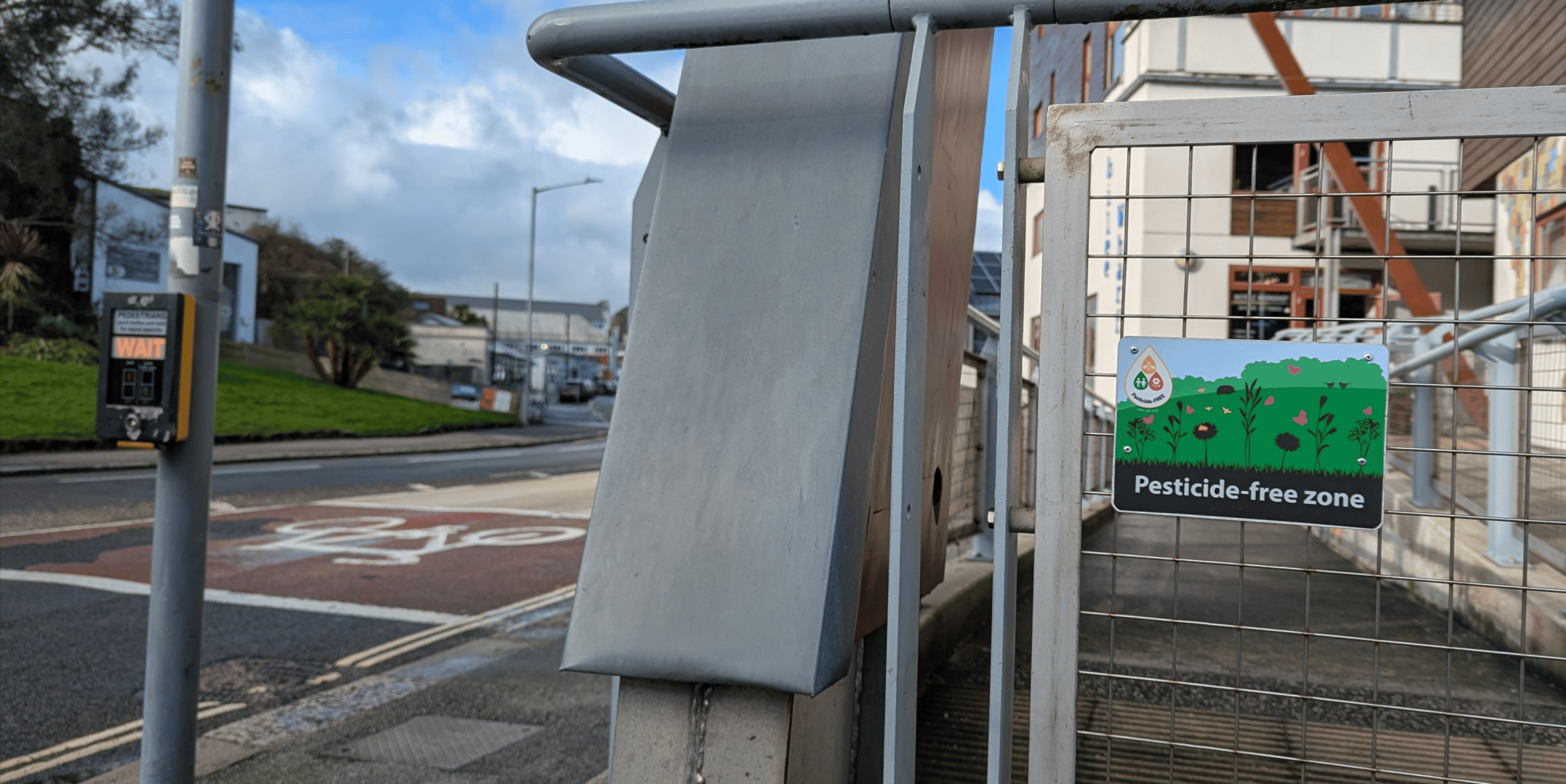
Image via: Cobblestone Media.
Leave a Reply