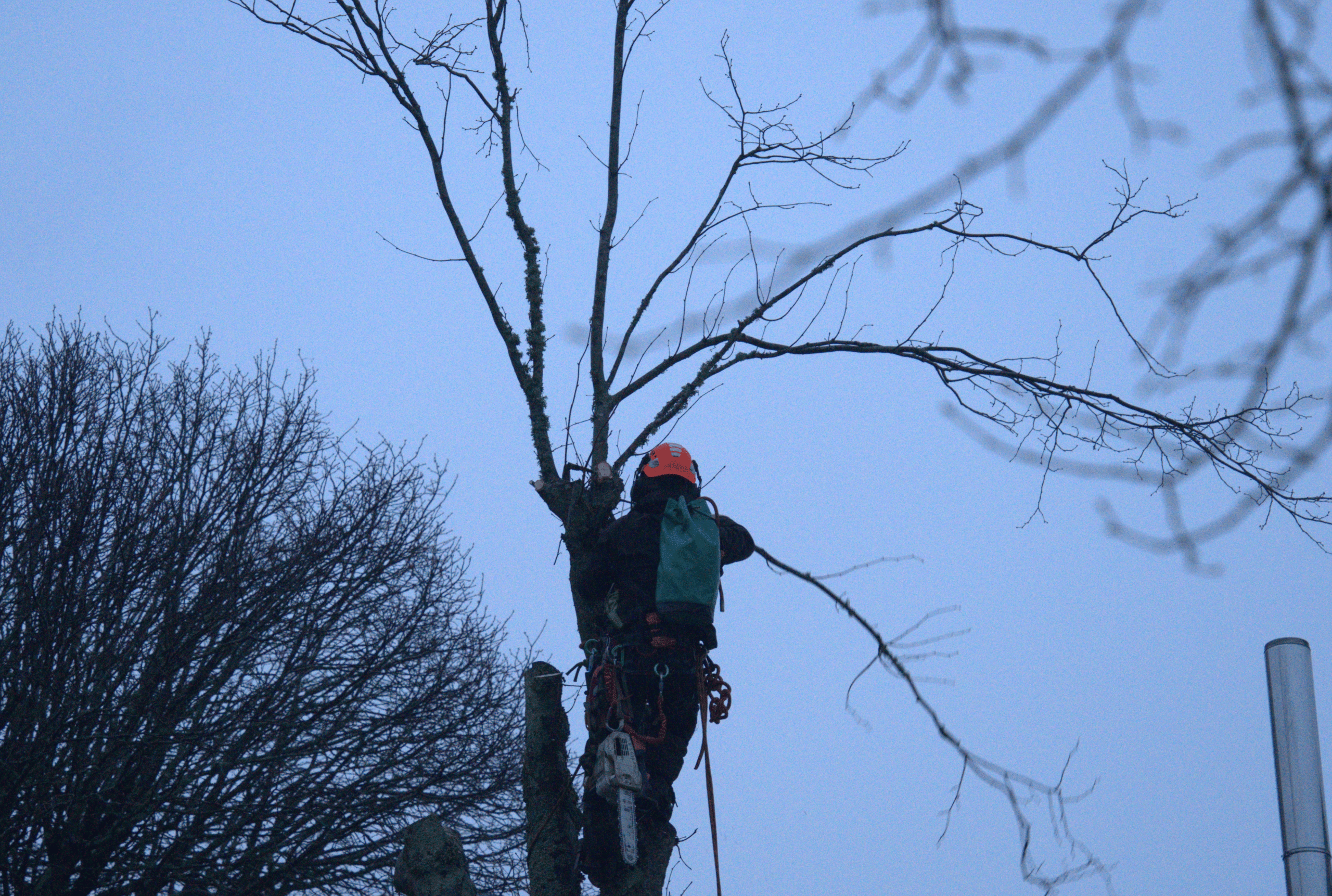
This morning, Cornwall Council and private contractors began cutting down the now-famous Trelawney trees in Falmouth. As they have done for just under a year, people from the local area attempted to resist the felling, including two protesters who had set up camp in the trees; however, efforts at resistance fell short in the face of the immense police presence, supported by “out of control” private security officers.
At 7am, protesters gathered at the bottom of Trelawney Road for a public demonstration, attempting to replicate previous defences of the trees. A number of them were violently removed from the street, during which one woman was dropped on her head by police and security. Members of the public also repeatedly faced intimidation from employees of a private security company, almost all of whom refused to give their names or the name of their contractor when questioned by protesters and press.
Today’s protest was also marked by a severe case of predatory media activity, with reporters belonging to local and national outlets continuously filming distressed protestors engaged in confrontations with the police. The main example from today’s protest was Deb Newman, who after sustaining a head injury from officers and security, was filmed and photographed continuously, – with those photographs later making their way to national press.
The Trelawney trees are the focus of a long saga in which Falmouth residents, with the aid of local councillors and experienced activists, have attempted to prevent the felling of three mature lime trees. During the campaign, suspicions have been raised about the apparent lack of evidence provided for the granting of the planning application.
These suspicions intensified after campaigners discovered a planning application submitted in 2021 and granted in 2022, which was signed by Catherine Mead, one of several Deputies in the Lord Lieutenancy of Cornwall. The application described the trees as a cause of “severe leaning of the wall, leaving it in danger of collapse.”
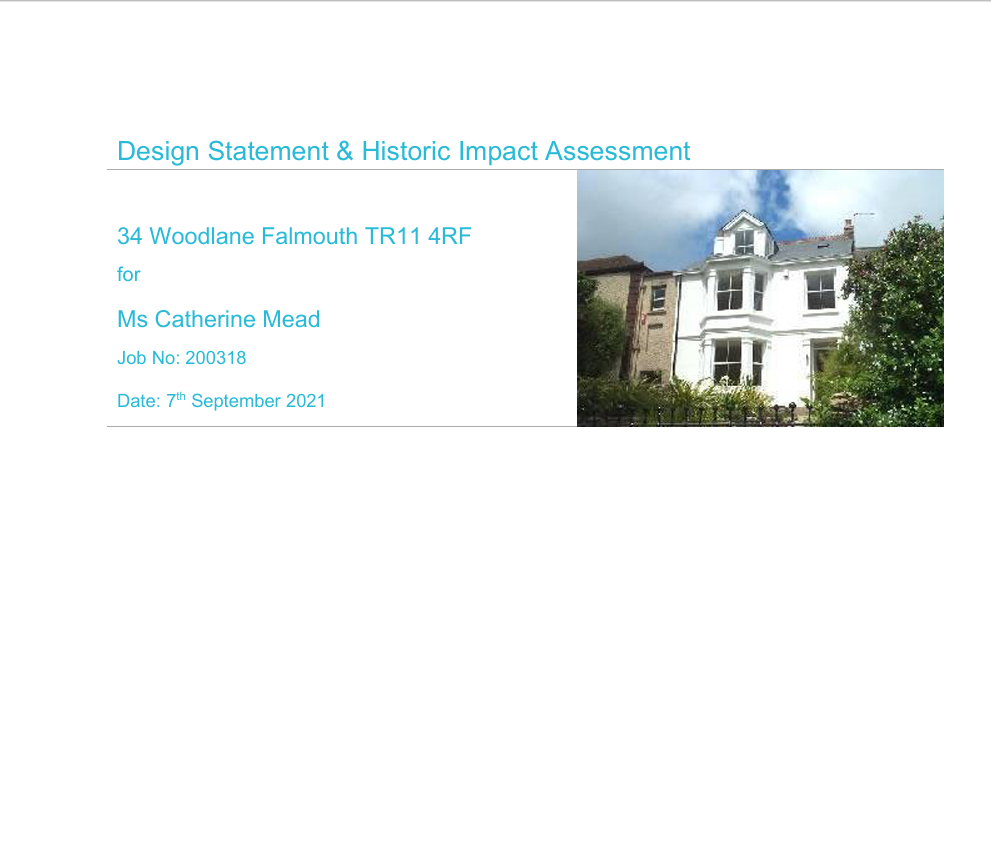
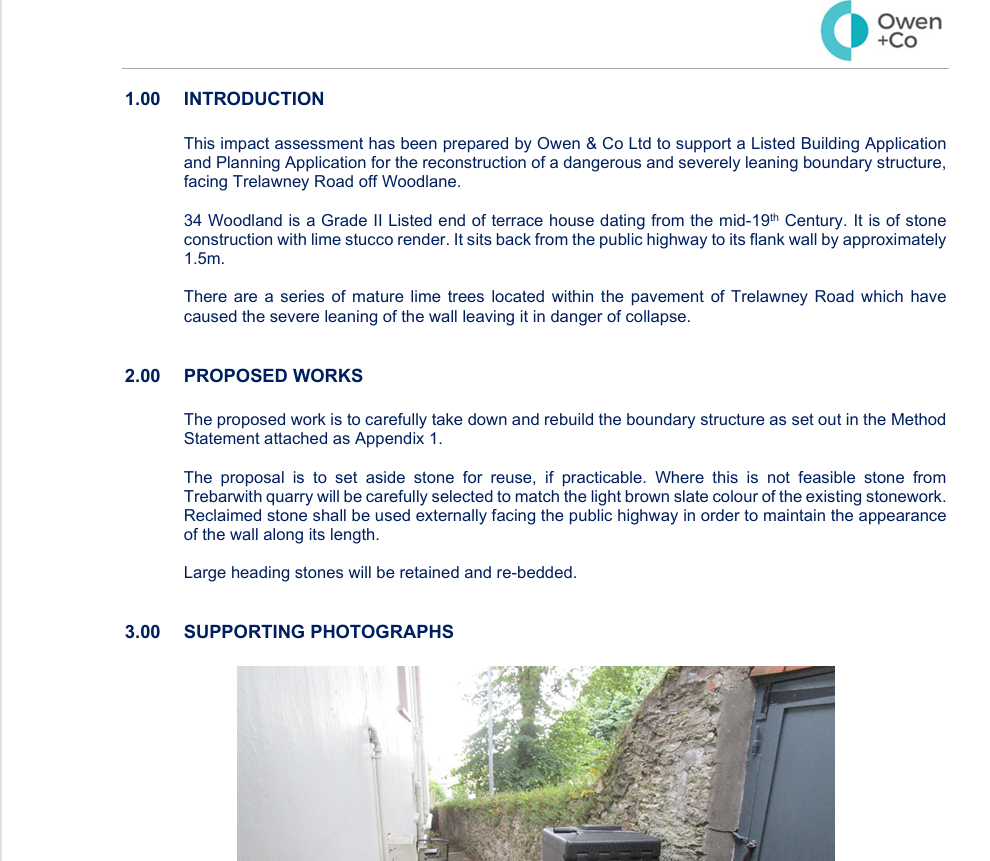
Many within the campaign have asked to see further evidence of this damage, which was not provided within the original application. Further, in the intervening four years, no further evidence has been presented to campaigners or the wider public to confirm the damage apparently caused by the tree roots.
In a public meeting on Wednesday at Falmouth Town Council, Phil Mason, Strategic Director for Sustainable Growth and Place for Cornwall Council, was grilled by campaigners. Mason admitted that the local authority had made a mistake by entering into an out-of-court deal with one of the owners of a house (he would not specifically state with whom) which included the substantial sum of £107,000 paid in damages and a gag order. He repeatedly claimed that he was privy to evidence of the damage caused by the trees, yet when pressed, would not disclose the particulars and stated that the audience would have to take him at his word.
Cobblestone Media spoke to one grassroots campaigner, who chose to remain anonymous. In their statement, they said:
“Today is a very sad day as we have finally lost the fight to save the trees. However, we have to look at what we’ve achieved as the Falmouth community. In spite of a massive push from Cornwall Council to rush through an illegal felling, Stop the Chop has managed to stop these trees being felled for an entire year.
“What we have to focus on is not that we lost the trees today. I actually think it was a huge victory. A small group of residents who merely asked to see evidence of damage caused by three beloved lime trees have managed to scare Cornwall Council into bringing in the cavalry from across the South West to make sure the trees were felled smoothly. At the end of the day, the ruling classes will get their way, no matter how many underhanded tactics they need to employ or strings they need to pull. But we have shown today that to hold off the Falmouth community, you need 30+ police and private security, and to make sure you’re set up by 3am.”
Though the trees are now cut down, the battle over them raises serious concerns about the nature of local democracy in Cornwall. Many within Stop the Chop have been prompted to ask “where does it end?” when it comes to planning decisions that affect the wider community. Some are looking to push for a more democratic consultation process within the local authority regarding cases such as the Trelawney Trees.
Image via: Cobblestone Media.
Leave a Reply